
The Storied Cry (4)
walk it out of the room

I write now on a greening June day, on the third floor of a Brooklyn townhouse built in 1865, when the country’s vitriolic combat reached a legally negotiated pause and long-enchained bodies were given forty acres and a mule, which they found it tougher and tougher to retain as their own. Rain lives in clouds farther south, sliding this way.
We’ve moved, my partner Neil and I, because our landlord for the last 15 years opted to sell the bricked, three-tiered place that had been our home, most likely for its land value. One day, all of it will be bulldozed, emptied of history and ripe for the rebuilding. It arose in 1900 as a way station for day-laborers from Poland, from Latvia, the metal workers and trench-diggers who sweated over what citizens felt disinclined to bend to.
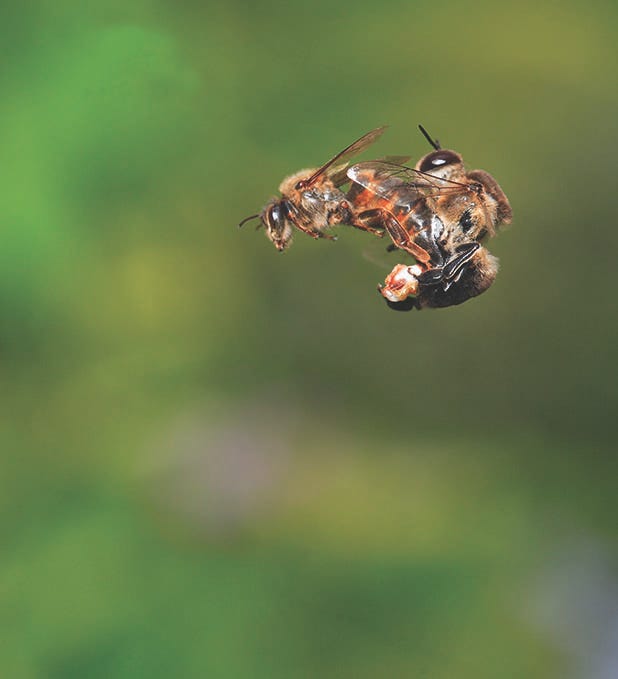
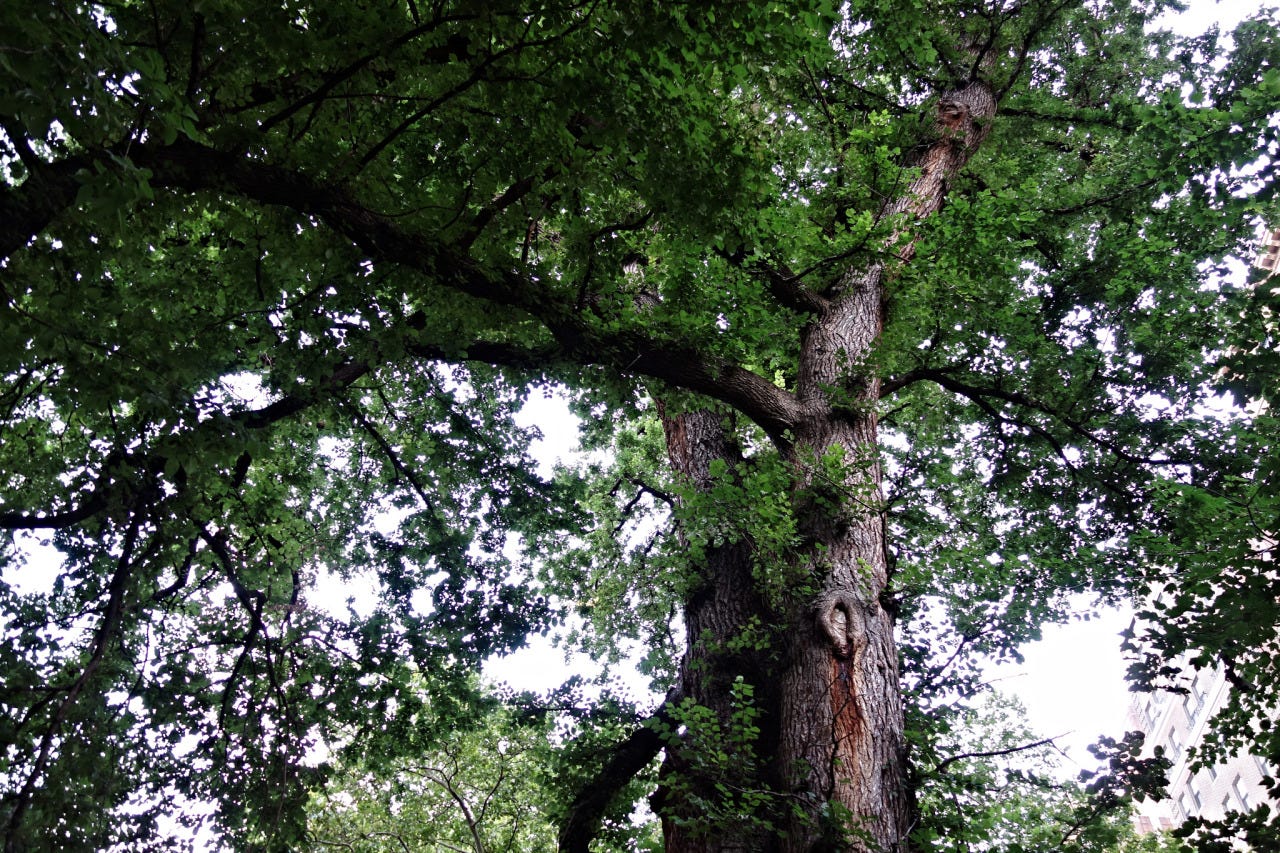
Under my newly placed desk among the branches, below bees that whirr and mate outside my window, tapping against the screen, lies the earth that the Boerum and Bergen families ordered should be ploughed by slaves whose language they could feel no interest in scuffling with to understand. On some lower level must be the soil where members of the Mohawk Nation stood, those resilient enough to still breathe among that onrush of the pale ones, who kept coming.
I’ve been watching Anne Carson’s 2016 conversation with Michael Silverblatt, filmed with support from the Lannan Foundation, where she tussles with the conventional essay’s end, the expectation that writers ought to fasten themselves to summing up everything they’ve pieced together, before. Carson vows, instead, that we should “blast it open,” defusing the presumption that you can offer a “nugget” for readers “to have”: don’t “have” the thought; “be in the thought”; make “the story go out of reach,” like much of this life that always passes, so that it can’t be tacked down, staked.
I know that our lives aren’t equivalent to essays, though so many of us teach and write them.
I know that layered pasts upthrow the passing present and that they shiver the air, if you squint a little.
But what happens to all that’s come before, when it’s clawed apart and ripped out of the ground?
I hear Björk sing in 2017’s “Future Forever”: Your past is on loop turn it off / see this possible future and be in it. But we should evaluate what we “loop” before we turn from it. At this moment, as the president withdraws our country from the UN Human Rights Council, as he defunds or terminates a web of environmental regulations, I can’t know if the citizens who gave him their votes, or who didn’t vote at all, care.
I do know that when self-interest becomes a flaming light, its burst into self-serving shudders everything that it touches.
I remember Daniel Hart’s score for A Ghost Story, how its initial two chords, sternly bowed, fractionize into bits belonging to the melody that C will write later for M. At the film’s close, the strings arrive at a slower, more plaintive incarnation of it, as if the past quaked in a future that reassembles this song, betters it. Away from CDs and screens and streaming, I hope that we can see to the getting there.
Not far from Washington Square Park, where renovations recently dug up a mass grave stuffed with the unmarked poor, the hanged, the few Indigenous bodies that withstood, for a while, the inrush of the Dutch, the English, my students and I were ready for our next-to-last class. We watched Georgia O’Keeffe at 90 recall herself at college-age, on the cusp of graduation, when she could find nothing of her own in all that painting and started over. We listened to Joni Mitchell tell us how her pregnancy after delighting in sex for the first time brought her to the “bad woman’s trail,” that she made music from the unmarried shame awaiting her there. We saw Keith Jarrett lift a Rameau-like tune out of a dissonant, sonic haze, so that late eighteenth century ruptures and beheadings were put to new use in a fragile present. My students were going to write of how these things spoke to them about our work, about the world that they hoped to more steadfastly join. Katarina volunteered to read her words aloud:
Georgia O’Keeffe says, and I paraphrase, “It’s as if my mind creates shapes that I don’t know about, shapes that repeat and change themselves without my knowing about it.”
If you take a bag made of leather and thread and take it apart—slowly, conserving all the pieces in a pile, noting exactly where everything goes, so that you can put it together again: all the pieces in the same places, nothing added, nothing removed. Can you say that it’s the same bag as you had before? Can you say that it’s not?
I feel like I am this bag. I feel as if we, me and the world, are always taking each other apart and putting each other back together. This is the work we have done in our class, the work that has been done on and with us. This is what I take with me, and what I will continue to do. For as long as I can, and then some.
We walked Katarina’s cry out of the room, into that mid-May afternoon and its still sun-shot streets. One by one, each of us seemed to hear the stories that might come after, in a future prepared by enough of us to listen for them.
Ooooh: layered pasts upthrow the passing present and shiver the air… the spatial looping of ideas and the overlapping of your Venn diagrams Bruce. Beautiful.